The digital transformation of transport signifies a fundamental shift in the sector’s organization and business models. This shift can disrupt existing roles, create new service models, and requires not just technological changes, but operational, organizational, and cultural changes as well. These changes are enabled by unseen digital infrastructures and networks, which allow for information to flow and payments to be processed, and they rely on both visible and invisible communication technologies. These digital infrastructures overlay traditional transport infrastructures and together build the changing landscape of the digital transformation of transport.
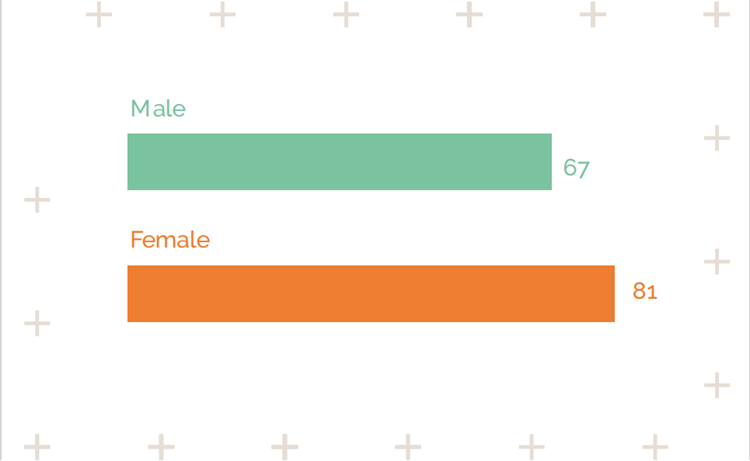
An example of these building blocks is mobile communications. In Latin America and the Caribbean (LAC), more than 84% of the population owns a smartphone. In the Caribbean region alone, the past 10 years have seen 3G and 4G coverage nearing universal range in several countries, and most countries of the subregion have a higher number of internet users than the global average. From digital payments in mobility, like Barbados’ Transport Board newly-implemented cashless system, to whole Port Community Systems being progressively deployed across the Caribbean, digitalization in transport appears to be an irreversible trend. These changes can have undeniable benefits with unprecedented efficiency gains, as a result of increased visibility and the coordination or integration of processes between actors, improved service quality, improved transparency and visibility for accountability, and reduced emissions from operational and energy efficiency.
The digital transformation of transport has not only changed transport systems but the government’s role within them. Digitalization brings changes to the public sector’s functions, value proposition, citizen expectations and responsibilities in the transport sector. Regulation, a traditionally slow process in government, now has to keep up with the rapid evolution of technologies like connected infrastructure, and mobility-as-a-service (MaaS), allowing for benefits and new industries to grow while preserving safety and security. Governments can also benefit from increasing amounts of data to better allocate resources and plan transportation policies, for example using sensors and historical data for real time traffic management.
In a 2022 study by the IDB a survey found that 69% of representatives from the public transportation sector cited a lack of digital culture as a barrier to advancing the digital transformation of their organizations. A short supply of specialized talent was also identified by 35% of respondents. This sectoral finding confirms trends across the public sector in LAC, where many efforts have been implemented yet digital culture and skills are still insufficient. The IDB then aims to accompany the region’s transportation public sector in building a digital culture, with free and available learning materials. That is why the course “Public Policy for the Digital Transformation of Transport” was created.
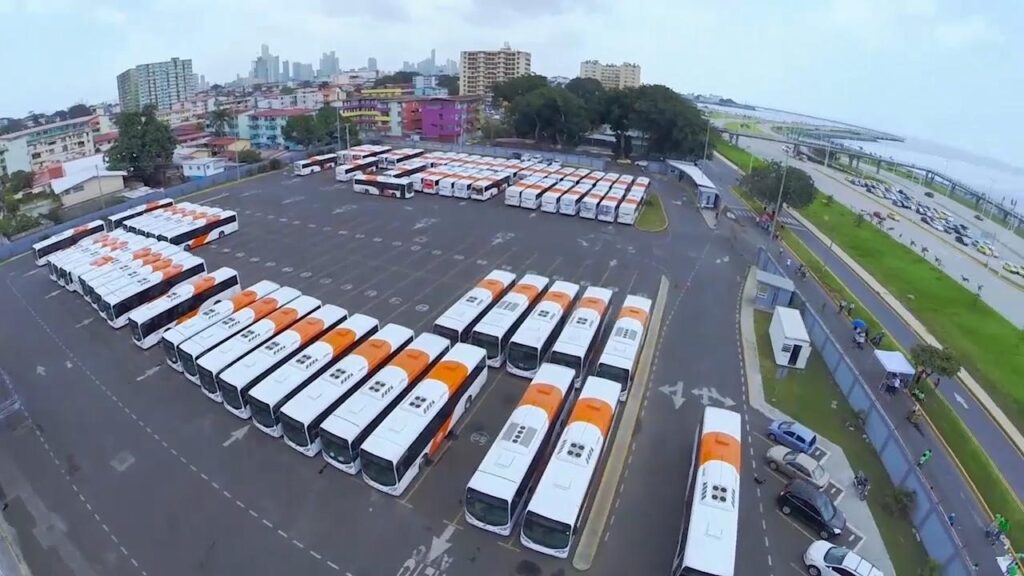
Public sector professionals who complete this course will not only gain a deeper understanding of digital transformation trends in transportation but also enhance their ability to contribute to policy development, strategic planning, and decision-making. With these new skills, they will be better equipped to foster innovation, increase transparency, and ensure more sustainable, efficient transport systems for the citizens they serve.
This short course will allow participants to understand the challenges of digital transformation and learn about technological trends that are shaping transportation, reviewing success stories, international case studies, and examples for the different sub-sectors: air transport, maritime transport, road transport and urban mobility. Additionally, based on the best practices of countries leading in digital transformation and lessons learned, it presents a set of public policy recommendations to accelerate the digital transformation of transport in the region.
This edition will include an optional experience for students that wish to expand their learning experience after the course, with additional impact evaluation and recognition of learning badges. Students will receive guidance to apply their online learning in real-world activities in their current institutions or environments. This novel method was designed by the IDB’s Knowledge and Learning Division and offers students the chance to receive certified digital credentials.
This course, Public Policy for the Digital Transformation of Transportation, is part of a broader regional effort to equip public sector employees in Latin America and the Caribbean with the skills and knowledge needed to navigate and lead the digital transformation of key industries. As governments across the region embrace innovation, participants in this course will be positioned to lead the charge in transforming the transport sector.
]]>In the face of this challenge, the digital transformation of the transport sector, an agenda supported by the Inter-American Development Bank (IDB), can become an important partner to help public institutions strengthen road safety and economic development. According to our recent study, a successful digital transformation of this sector can reduce inequality and generate a net increase in GDP greater than 4 percent.
Technologies such as electronic stability systems have the potential to reduce traffic fatalities by 67 percent, according to the World Bank. The availability and analysis of digital data can also facilitate more accurate interventions. For example, Nairobi used data sources such as social networks and police records to determine that more than half of the accidents there occurred on only 1 percent of the road network. This allowed for focusing infrastructure improvements on 45 kilometers instead of the entire network of 4,500 kilometers.
Measuring the Level of Maturity with RutaDigital
Aware of the opportunity, the Instituto Nacional de Tránsito y Transporte Terrestre (INTRANT) of the Dominican Republic has taken a significant step forward with the implementation of the INTRANT Digital Initiative. To support the country with this project and its Road Safety Policy Initiative (Política Nacional de Seguridad Vial – PNSV), the IDB’s Transport Division has conducted a technical visit to help the Dominican Republic identify the level of digital maturity of its road agencies through application of the RutaDigital methodology.
Developed by the IDB, RutaDigital measures progress on the digital transformation of road agencies against best practices. This allows for identifying strengths and opportunities for improvement in the use of technology and digitalization of processes that directly impact the public, supporting the design of precise interventions and the establishment of a baseline to assess progress. More specifically, the methodology assesses the level of maturity of the following dimensions:
- Governance and institutions
- Regulatory framework
- Change management and digital talent
- Processes and services
- Sectoral digital technologies and tools
- Crossing-cutting information and infrastructure technologies
- Maturity and capacity relating to data
Illustration of the Result of the RutaDigital Tool
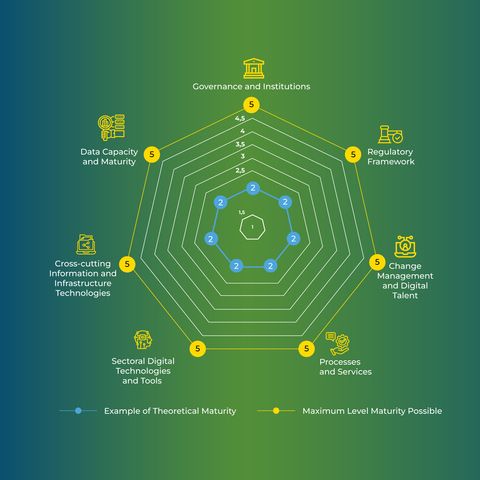
Product of the Transport Division of the IDB
Findings of the Diagnostic of the Potential for a Digital Future
During a mission in August 2025, INTRANT technical teams and IDB specialists analyzed the various components of the model associated with the management of safe mobility, including the dimensions of sectoral technologies, digital talent and change management, and maturity and capacity relating to data.
The application of RutaDigital offered a comprehensive diagnostic of digital maturity, with general and technical recommendations, including rapid improvements that can be structured in projects and other measures that create institutional roadmaps.
For example, the tool allows for identifying opportunities to develop and foster digital talent or to highlight opportunities to improve technological procurement processes. This ensures that digital investments are aligned with institutional priorities and the needs of all who use the roads in the Dominican Republic. The diagnostic provided INTRANT with a more holistic vision of the principal dimensions of its digital transformation process, enabling the institution to be better prepared to address the challenges of this transformation, optimize its activities and processes to promote safer mobility, and boost the INTRANT Digital Initiative.
From Diagnostic to Reality
The digital transformation is not an end in itself, but rather a tool to improve people’s lives by helping to ensure safer roads for their daily travels.
The digitalization of INTRANT will facilitate improving processes to manage and use data on road accidents as the basis for planning, implementation, and monitoring of safe mobility programs. At the same time, it will contribute to more agile and transparent procedures for citizens, opening the door to new forms of participation and the development of improved services. For the IDB, it is important to assist the Dominican Republic in this transformation, both with this initiative as well as others, such as the training of 41 transit agents of the Dirección General de Seguridad de Tránsito y Transporte Terrestre (DIGESETT) who will travel to Spain to attend a Master’s course in Road and Traffic Safety.
For the transport sector, the adoption of advanced technologies means more secure, efficient, and sustainable systems. From traffic monitoring to the management of licenses and permits, the potential of the digital transformation is enormous, and its benefits extend to all of society.
]]>Against this backdrop, the Inter-American Development Bank (IDB) is exploring how artificial intelligence (AI) can be applied to infrastructure. For example, in public transportation, route optimization algorithms are helping reduce travel times and congestion. In water and sanitation, predictive models make it possible to detect leaks and anticipate outages in distribution networks. In energy, AI is used to forecast demand and facilitate the integration of renewable energy at scale.
These advances and lessons are covered in the IDB’s publication“AI from the Ground Up: Challenges and Opportunities in the context of Latin America and the Caribbean”, which presents real-world cases, recommendations, and practical guidelines on how AI can become a key tool to strengthen the region’s critical infrastructure.
Challenges for Our Infrastructure
Infrastructure in the region faces challenges such as aging physical structures, accelerated urbanization, population growth, and the impact of climate events. The consequences include disruptions in essential services and rising costs of use, which lead to unequal access.
However, technology can help reverse these trends. IDB estimates suggest that a 15% reduction in infrastructure service costs through the efficient use of digital technologies could increase the GDP of Latin America and the Caribbean by 6% over the next 10 years.
How AI Can Make a Difference in Infrastructure
Although more than 40% of public agencies in transportation and energy in LAC lack a clear digital transformation strategy, any entity can implement AI-based projects. In critical infrastructure sectors, the implementation of machine learning models is already within reach for many governments and organizations.
Some concrete examples show this potential in the region across three areas:
- Energy: AI systems predict consumption patterns and help balance supply and demand, facilitating the integration of intermittent renewable energies such as solar and wind.
- Water and sanitation: Predictive models supported by smart sensors allow detection of invisible leaks and anticipation of pipe ruptures, reducing water losses and maintenance costs.
- Transportation: Traffic optimization algorithms help reduce congestion and improve route efficiency in urban public transport.
Effective AI Adoption
The report offers the following recommendations to unlock AI’s potential in critical infrastructure sectors:
- Adopt agile methodologies that include proof of concepts, prototypes, and minimum viable products. These tools make it possible to experiment with AI-based solutions before scaling them.
- Establish organizational structures that drive AI adoption, ensuring that teams have the necessary technical skills.
- Data quality determines the success of AI projects. Building high-quality data requires identifying sources, designing efficient data flows, and ensuring adequate architectures for storage and processing.
- Evaluate infrastructure requirements from the outset, especially storage and computing capacities needed for AI models.
- Ensure that AI models address specific and measurable problems, based on data quality, computing capacity, explainability, and performance.
- Incorporate ethical principles from the design stage, addressing privacy, security, and transparency to build trust in solutions.
AGMA is a nonprofit coalition of leading technology companies, distributors, and service providers, incorporated in 2001 by leading technology companies. AGMA is a unique alliance of intellectual property rights holders who recognize that IP protection is a fundamental element of innovation and economic growth.
“This partnership with AGMA exemplifies CBP’s commitment to leveraging innovative technology and collaborative efforts to protect American consumers and businesses from counterfeit goods,” said Acting Executive Assistant Commissioner, Office of Field Operations Diane J. Sabatino. “By equipping our officers with advanced tools and resources, we are enhancing our ability to ensure the authenticity of products entering the United States while safeguarding the integrity of our supply chains and protecting the innovation economy.”
In addition to the “OneDevice” smartphones, AGMA is donating data plans, licenses, training materials, and customer support. AGMA’s donation underscores its commitment to combating trade in counterfeit goods while supporting CBP’s enforcement efforts. By leveraging advanced technology and collaborative partnerships, CBP continues to strengthen its ability to safeguard the U.S. economy and public safety.
“As a coalition of the world’s leading technology companies, AGMA is committed to protecting consumers and safeguarding global commerce,” said Sally Nguyen, president of AGMA. “We are proud to partner with CBP through this program and to provide technology that supports officers in their critical mission to identify counterfeit goods before they enter the United States.”
Public-private partnerships are a key component of CBP’s Resource Optimization Strategy and allow CBP to provide new or expanded services and infrastructure at domestic ports of entry. For more information, visit www.CBP.gov/DAP.
U.S. Customs and Border Protection (CBP) is America’s frontline: the nation’s largest law enforcement organization and the world’s first unified border management agency. The 65,000+ men and women of CBP protect America on the ground, in the air, and on the seas. We enforce safe, lawful travel and trade and ensure our country’s economic prosperity. We enhance the nation’s security through innovation, intelligence, collaboration, and trust.
]]>Beginning after sundown Oct. 6, until after nightfall Oct. 13, travelers observing Sukkot may carry religious items that are normally regulated to prevent the introduction of invasive pests and diseases. These items, including ethrogs, palm fronds (lulav), twigs of willow (aravah) and myrtle (hadassim), might be allowed into the United States after inspection by CBP agriculture specialists.
The following guidance is provided for travelers:
- Ethrogs: Travelers can bring ethrogs into the U.S. through specific ports in the North Atlantic or Northern Pacific regions. The ethrog will need to be unwrapped so a CBP agriculture specialist can inspect it and will not be allowed in if they find pests or insect damage.
- Palm Fronds: Single palm fronds will be inspected by CBP agriculture specialists and released if they find no pests or symptoms of disease.
- Twigs of Willow: European twigs of willow are prohibited from entering the United States, but if they come from other locations, they will be inspected by CBP agriculture specialists and released if no pests or symptoms of disease, such as being green in color, having soft tissue, or sprouted buds are found.
- Twigs of Myrtle: Twigs of myrtle will be inspected by agriculture specialists and released if no pests or symptoms of disease are found.
CBP is committed to treating all travelers with respect and dignity at all U.S. ports of entry. More information on seasonal foods and plant items can be found here.
U.S. Customs and Border Protection (CBP) is America’s frontline: the nation’s largest law enforcement organization and the world’s first unified border management agency. The 65,000+ men and women of CBP protect America on the ground, in the air, and on the seas. We enforce safe, lawful travel and trade and ensure our country’s economic prosperity. We enhance the nation’s security through innovation, intelligence, collaboration, and trust.
]]>
The Skytrain’s return is such great news for our airport, our passengers, and our community. Thanks to the tireless work of the MIA team, we have restored a world-class amenity that makes travel easier and faster for millions of people each year. I know the temporary closure wasn’t easy for travelers, and I thank everyone for their patience and understanding. This reopening is a milestone that reflects progress, resilience, and a brighter future for Miami’s global gateway, and proof that we are moving in the right direction.
Miami-Dade County Mayor Daniella Levine Cava
The reopening of Station 1 concludes a yearlong effort to reinforce and modernize the one-mile system after a 2023 inspection identified areas in need of strengthening. With Stations 2, 3, and 4 reopening earlier this year, the Skytrain is now operating at full capacity with enhanced safety, reliability, and efficiency — ensuring passengers can move comfortably between gates, shops, and services.
The Skytrain’s return is in addition to MIA’s ambitious Future-Ready Modernization in Action (M.I.A.) Plan, a $9 billion capital improvement program that is transforming every corner of the airport. From the new 2,240-space Ibis garage opening in December, to the groundbreaking of the new Concourse K, and the modernization of more than 200 escalators, elevators, and moving walkways over the next five years, the MIA of tomorrow is taking shape today — delivering a world-class passenger experience, empowering the airport workforce, and fueling economic growth across Miami-Dade County and Florida.
Miami International Airport, America’s busiest airport for international freight and the second busiest for international passengers, is receiving an unprecedented investment of $9 billion in capital improvements and maintenance upgrades. MIA offers more flights to Latin America and the Caribbean than any other U.S. airport and is also the leading economic engine for Miami-Dade County and the state of Florida, generating business revenue of $181 billion and approximately 60 percent of all international visitors to Florida annually.
To request materials in accessible format, Sign Language Interpreters, CART services and/or any accommodation to participate in any Miami-Dade Aviation Department (MDAD) public meetings and events please email the ADA Office at ADAcoordinator@miami-airport.com or call the office in 305-876-7747 five days in advance to initiate your request. Persons who are deaf or hard of hearing may also call 711 (Florida Relay Service).
]]>PS MIA will restore and redesign the historic former Pan American Airways (Pan Am) headquarters at 4900 N.W. 36th Street into a private terminal that will include five private suites, two salons with dining options, a central outdoor courtyard, and a day spa with beauty treatments and massages. The Pan Am building has been a Miami-Dade County-designated Historic Site since 2014. PS MIA is dedicated to preserving the building’s iconic mid-century brutalist architecture and will seamlessly integrate finishes and furniture that reference important aspects of the period.
With the groundbreaking of PS MIA, we’re ushering in a new era of luxury travel at Miami International Airport—right here in the heart of Miami-Dade County. This first-of-its-kind private terminal in Florida not only enhances the world-class experience our airport offers but also breathes new life into a historic landmark that shaped aviation history. I’m proud to welcome PS to our community and applaud their commitment to honoring our past while designing for the future.
Miami-Dade County Mayor Daniella Levine Cava.
The building’s iconic features, such as the Pan Am logos, gold paneling, and original reflecting pools, will be restored, while the design takes inspiration from Miami’s lively culture and Palm Beach glamour, incorporating terrazzo, marble, smoked glass, and luxurious patterns reminiscent of Lilly Pulitzer and Marimekko. PS MIA is a collaboration between RJ Heisenbottle Architects, experts in historical restoration, and renowned interior designer Cliff Fong, who led design at PS LAX.
Miami International Airport, America’s busiest airport for international freight and the second busiest for international passengers, is receiving an unprecedented investment of $9 billion in capital improvements and maintenance upgrades. MIA offers more flights to Latin America and the Caribbean than any other U.S. airport and is also the leading economic engine for Miami-Dade County and the state of Florida, generating business revenue of $118 billion and approximately 60 percent of all international visitors to Florida annually.
To request materials in accessible format, Sign Language Interpreters, CART services, and/or any accommodation to participate in any Miami-Dade Aviation Department (MDAD) public meetings and events, please email the ADA Office at ADAcoordinator@miami-airport.com or call the office at 305-876-7747 five days in advance to initiate your request. Persons who are deaf or hard of hearing may also call 711 (Florida Relay Service).
]]>This planned transition comes at a pivotal time for Britten-Norman, as the company embarks on a new phase of investment, innovation, and strategic development. The Board expresses its deep gratitude to William for his remarkable leadership, having steered the business through multiple industry cycles and playing a pivotal role in securing its legacy as a key part of the UK’s aerospace capability.
“William has been the driving force behind Britten-Norman’s continuing resilience and growth” comments Board Chair Alison Rankin Frost. “His deep knowledge of the business and commitment to UK sovereign manufacturing have shaped the company into what it is today. We are delighted that he will continue to provide strategic oversight and guidance as a Non-Executive Director, on the Board.”
Since joining Britten-Norman, Hynett has led the company through significant transformation — including major investment in infrastructure, manufacturing, and customer support — while staying true to the company’s heritage of producing the iconic Islander aircraft. Notably, he spearheaded the successful re-shoring of Islander production from Romania back to the UK, reinforcing the company’s commitment to sovereign manufacturing. Under his steadfast leadership, Britten-Norman has strengthened its global customer base and reaffirmed its strategic importance to British industry.
“It has been an honour to serve Britten-Norman over the past two decades,” says Hynett. “This business has always been more than just a company to me — it’s a part of my family’s legacy. It was my late father, Maurice Hynett, who first encouraged me to get involved, and I’ve carried that sense of personal commitment with me ever since. I am incredibly proud of what the team has achieved in safeguarding our heritage, supporting our customers, and investing in our future. With new capital backing and an exciting strategic roadmap, now is the right time to hand over day-to-day leadership. I look forward to supporting Britten-Norman and its next chapter from the Board.”
Under Hynett’s stewardship, the company recently secured substantial new investment aimed at expanding operations and advancing manufacturing capabilities at its Solent and Isle of Wight facilities.
His leadership has also been recognised at the national level with the award of an OBE, honouring his services within the aviation industry and his enduring commitment to the development of special mission aircraft.
Britten-Norman remains firmly focused on supporting its global operator base, delivering world-class aviation products and services, and advancing UK aerospace innovation.
About Britten-Norman:
Britten-Norman is the UK’s only sovereign commercial aircraft manufacturer and a global leader in sub-regional aviation. Best known for the Islander, a rugged, twin-engine STOL aircraft. The company has produced circa 1,300 aircraft to date, with 97% exported to commercial, government, and military operators worldwide. Operating as a UK-based SME, Britten-Norman offers in-house design, manufacturing, and through-life support from its south coast facilities. The company continues to invest in its UK production base, playing a strategic role in the domestic aerospace supply chain while supporting a global operator network in over 120 countries. With a strong track record in utility, special mission, and regional transport applications, Britten-Norman remains a leader in the sub-regional segment delivering proven aircraft backed by robust support infrastructure. For more information, visit www.britten-norman.com
About William Hynett:
William Hynett joined Britten-Norman in 2002, initially as Marketing Director, with a primary focus on foreign military opportunities. Since being appointed Chief Executive in March 2003, Hynett has led the company through a period of sustained growth and diversification and played an important role in helping the company to explore new markets across six continents. In 2023 he led the repatriation of the company’s manufacturing operations to the UK, after more than 50 years of outsourcing to Eastern Europe. An advocate of engineering apprenticeships, he helped pioneer a comprehensive training programme that has delivered highly sought after candidates into the aerospace sector. Prior to joining Britten-Norman, Hynett served in the Royal Navy’s Fleet Air Arm as a carrier-borne fighter pilot, serving in Bosnia, Iraq and Kosovo. He went on to lead the Sea Harrier Operational Evaluation Unit, specialising in trials of new equipment both at home and overseas. The experience gained in the military allowed Hynett to drive a pivot of Britten-Norman’s strategy towards the special mission sector, in which it is now a market leader in capability development. For his leadership in the company’s delivery of urgent operational requirements on behalf of the UK government, Hynett was awarded the OBE at Windsor Castle in 2011. A keen pilot, Hynett is qualified on both single and multi-engine fixed wing aircraft. He has flown a number of long-range deliveries of Islander aircraft as far as Alaska, the Falkland Islands and the South Pacific.
]]>“With this new agreement, our TWU-IAM Association-represented team members join their colleagues who have all approved new agreements that underscore American’s commitment to ensuring our team is paid well and competitively,” said American’s CEO Robert Isom. “I’d like to thank both the Association and company negotiating teams for seeing the important win this contract extension is for our team and for working to reach a deal — one that ensures our team is paid among the best in the industry — so quickly.”
About American Airlines Group
As a leading global airline, American Airlines offers thousands of flights per day to more than 350 destinations in more than 60 countries. The airline is a founding member of the oneworld® alliance, whose members serve more than 900 destinations around the globe. Shares of American Airlines Group Inc. trade on Nasdaq under the ticker symbol AAL. Learn more about what’s happening at American by visiting news.aa.com and connect with American @AmericanAir and at Facebook.com/AmericanAirlines. To Care for People on Life’s Journey®.
Speaking at a recent maritime industry forum in Hamburg, Mr. Leontopoulos said the sterntubeless ship design – jointly developed by Blue Ocean Alliance members ABS, Thordon Bearings, Shanghai Merchant Ship Design and Research Institute (SDARI), Wärtsilä, and the National Technical University of Athens (NTUA) – is so commercially, operationally and environmentally attractive that “I personally hope that in the future all ships are built like this”.
Kick-starting his presentation with the startling statistic that more than eight million litres of sterntube lubricating oil is polluting the oceans annually, Mr. Leontopoulos, ABS’ Vice President, Technology, EMEA, said the design interventions proposed by the group can deliver a commercially and environmentally optimal vessel capable of saving hundreds of thousands of dollars in operational costs. This, without changing hull lines or existing class rules and regulations.
“We decided to remove the sterntube, and by shortening propeller shaft length and moving the prime mover further aft, we no longer needed a forward sterntube bearing. This places less friction on the shaft, resulting in lower power loss, improved fuel efficiency and reduced emissions. A sterntubeless ship also results in a bigger cargo space for the same vessel length,” he said.
Mr. Leontopoulos went on to say that the use of a seawater-lubricated bearing with a tapered key design – the principal component that makes the sterntubeless ship possible – also removes the need for an aft seal and a shaft coating system. The sterntubeless design features a seawater-lubricated bearing, a Wärtsilä forward shaft seal, a Water Quality Package and a bulkhead seal.
The technical differences were immediately obvious when a graphic was shown comparing a ship with and without a sterntube.
Essentially, the design presents a dry internal inspection chamber aft of the engine room, in the space normally given to the sterntube. This new space, big enough for engineers to stand up in to maintain or replace propeller shaft components while the ship is afloat, has been created by trimming stiffeners and cutting an opening into the bulkhead.
“This is a very a big advantage because you don’t have to drydock the ship and withdraw the shaft or propeller to monitor and maintain seawater-lubricated bearings and seals. We can now do this from inside the ship while the vessel is operational,” said Mr. Leontopoulos.
The sterntubeless ship, he said, also negates the need to realign the shaft throughout the vessel’s lifetime, mitigating the risk of shaft damage or indentation, which can result in substantial downtime and expenditure.
Going on to reveal the cost benefits of a sterntubeless ship, Mr. Leontopoulos acknowledged that although the estimated CAPEX for additional components could add about US$10,000 to $30,000 to the cost of a newbuild depending on shaft diameter, the ROI is quick given the reduced operational expenditure. This is where the real financial gain is to be made.
He told conference delegates that aside from immediate savings of US$350,000 in lubricating oil, operators could save more than US$1 million in through-life operational costs.
This is based on reduced fuel consumption, reduced drydocking and maintenance costs, and associated loss of earnings; shaft alignment optimization, lower bearing wear rates, better EEDI; and an increase in cargo carrying capacity. The arrangement also reduces to zero the risk of environmental fines related to sterntube oil pollution.
Summing up he said: “There’s no pollution risk, no oil changes, and no need to drydock to change the bearing. A shorter shaft line and smaller engine room space increases cargo space and improves EEDI ratings; there is no barred speed range and no fatigue concerns. It complies completely with all existing class rules.”
On that latter point, ABS has now published a Requirements for Sterntubeless Vessels with Water-Lubricated Bearings guide, bringing together in one document all existing applicable rules for the design. ABS is also introducing a new notation for the sterntubeless ship design, for which the classification society awarded an AiP in June 2022.
Neil McDonald, Thordon Bearings’ Regional Manager – Northern Europe & Africa, said: “The sterntubeless ship design proposed by the Blue Ocean Alliance is truly a milestone development for the global shipping industry. This part of the ship hasn’t changed since the advent of steam propulsion.
“Simply by remodeling the sterntube space and replacing an oil-lubricated bearing system with one lubricated by water, newbuild ships can be substantially more environmentally and operationally sustainable, without the need for new class rules and notations. It is significant design intervention.”
Chris Leontopoulos believes the first sterntubeless ship with a Thordon seawater-lubricated propeller shaft bearing system, probably based on a SDARI design, will be ordered within the next twelve months.
]]>