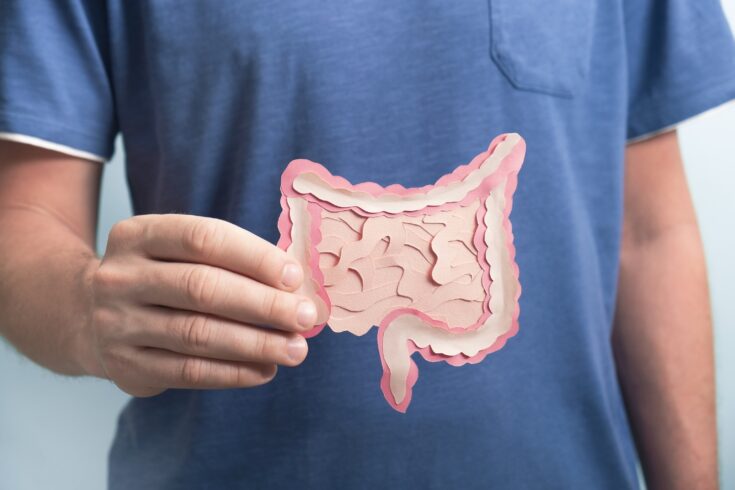
Gut microbes can reveal whether a person faces an elevated risk of Parkinson’s disease, before they have developed any symptoms.
The study, funded by the Medical Research Council (MRC), found that people with Parkinson’s and healthy individuals at genetic risk of the disease have a distinctive makeup of gut microbes.
Led by researchers at the University College London (UCL), they say their findings could be used to develop a test to reveal a person’s risk of developing Parkinson’s disease to provide early intervention.
It could also potentially also lead to new ways to prevent Parkinson’s by targeting the gut.
Mounting evidence
Professor Anthony Schapira (UCL Queen Square Institute of Neurology), lead investigator of the study, said:
Parkinson’s disease is a major cause of disability worldwide, and the fastest growing neurodegenerative disease in terms of prevalence and mortality.
There is an urgent need to develop treatments that can stop or slow the disease’s progression.
To enable both the research and eventual use of such treatments, we need to develop the means for very early detection of people who will, or likely will, go on to develop the disease.
In recent years there has been a growing recognition of the links between Parkinson’s disease – a brain disorder – and gut health.
Here we have strengthened that evidence and shown that microbes in the gut can reveal signs of Parkinson’s and may be an early warning signal of Parkinson’s risk years before symptom onset.
The study
The international team of scientists at UCL in collaboration with INRAE (Institut national de la recherche agronomique, in France) analysed clinical and faecal data from participants in the UK (the Royal Free Hospital, London) and Italy.
The study included:
- 271 people with Parkinson’s disease
- 43 carriers of the GBA1 variant (a gene variant that can increase the risk of Parkinson’s up to 30-fold) with no clinical symptoms
- 150 healthy control participants
The microorganisms
The scientists found that over a quarter of the microbes making up the gut microbiome, 176 different species, differed in abundance when comparing people with Parkinson’s disease and the healthy control group.
Some microbes were more common among those with Parkinson’s disease, while others were more common among healthy study participants.
This trend was most noticeable among people in more advanced stages of Parkinson’s.
Establishing patterns
The majority of these microbes (142 species) also consistently differed in abundance when comparing healthy controls to people with the GBA1 gene variant who have not yet experienced any symptoms of Parkinson’s disease.
The researchers say the gut microbiome in people who are genetically at risk of Parkinson’s, but without any symptoms, resembled an intermediate pattern between the healthy individuals and those with Parkinson’s.
A small proportion of the healthy control participants also had gut microbiomes similar to those at risk of Parkinson’s disease, raising the question of whether they might also be at risk.
Dietary habits
Study participants also provided data about their dietary habits.
This data revealed some evidence that those with a more balanced and varied diet are less likely to have gut microbiomes that suggest an elevated risk of Parkinson’s.
The researchers say this may suggest that diet modification could play a role in Parkinson’s prevention.
Dietary adjustments
Professor Schapira added:
For the first time we identify bacteria in the gut of people with Parkinson’s that can also be found in those with a genetic risk for the disease, but before they develop symptoms.
Importantly, these same changes can be found in a small proportion of the general population that may put them at increased risk for Parkinson’s.
This discovery opens the way not only to see if the bacteria are a way to identify those at risk of Parkinson’s, but also to see if changing the bacterial population, through dietary changes or medication, can reduce a person’s risk for Parkinson’s.
Reducing risk
Co-lead author Professor Stanislav Dusko Ehrlich, honorary professor at the UCL Queen Square Institute of Neurology, said:
Gut microbiome analysis can enable us to identify individuals who are at risk of developing Parkinson’s disease, so that we can suggest ways for them to reduce their own risk, such as through dietary adjustments.
The scientists corroborated their findings by comparing their results to additional cohorts of people in the UK, Korea and Turkey, totalling an additional 638 people with Parkinson’s disease and 319 healthy control participants.
The study was also supported by the Michael J. Fox Foundation for Parkinson’s Research.